



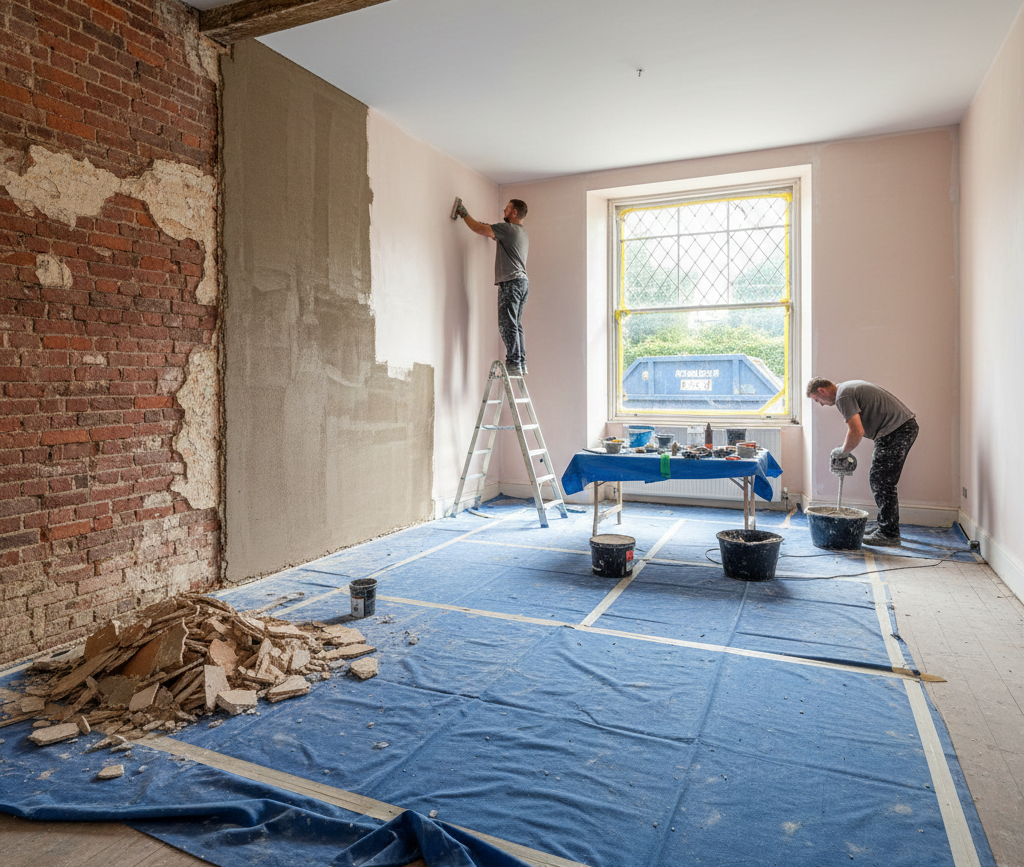
Restoring the interior of a property often starts with the most fundamental element: the walls. For homeowners in Cheltenham, the decision to strip away decades of failing material is a significant step toward improving both the aesthetic and structural health of a building. Heritage Plastering specializes in these comprehensive transformations, ensuring that every project respects the unique architectural character found throughout our local area.
Many people confuse a simple skim coat with a full replastering project. While a skim involves a thin layer of finishing plaster over an existing surface, a full replaster is a deep-level restoration. This process is essential when the original bond between the plaster and the substrate has failed, leading to hollow sounds or visible sagging.
How much does it cost to replaster a room in Cheltenham?
Estimating the financial commitment for a full restoration depends on the specific dimensions and the current condition of the substrate. In 2026, the typical price to completely replaster a medium-sized room in Cheltenham ranges from £1,400 to £2,800. This figure accounts for the heavy labor involved in removing old materials and rebuilding the wall surface from the core.
Labor usually represents the largest portion of the quote. Stripping a room back to the brickwork or timber laths is a physically demanding task that generates a substantial volume of debris. For a standard four-by-four metre room, the removal phase alone can take a full day for a two-person team. This reflects the high standard of care required to protect the rest of the property from dust and impact damage.
Full Replastering Services in Cheltenham Homes
The choice of materials also creates a significant variance in the final invoice. Modern gypsum-based systems are generally more affordable and faster to apply. However, many properties in the town center require traditional methods to remain structurally sound. Understanding the lime plaster vs gypsum plaster cost is vital for anyone owning a Regency or Victorian home.
Preparation is a phase that should never be rushed. If the underlying brickwork is damp or salt-contaminated, specialized treatments must be applied before the first coat of plaster. These additional steps ensure that the new finish does not fail within a few years.
Complexity of the room layout further influences the time on site. A room with multiple windows, door frames, and intricate alcoves requires more precision beadwork. Every external corner needs a galvanized or plastic bead to ensure a straight, impact-resistant edge. These details take time to set and align, which naturally adds to the labor hours required.
Understanding Replastering Costs and Methods in Cheltenham
If you are only addressing a single problematic area, the cost of plastering services for an individual wall typically starts at £400. This includes the setup, the application of a backing coat like bonding or hardwall, and the final finishing skim. Smaller jobs often carry a minimum call-out fee to cover the logistics and material transport.
For those renovating historic properties lime plaster is frequently the required specification. This material is more expensive than modern alternatives because it must be applied in several stages. Each coat of lime requires a specific curing period before the next can be added, meaning the tradesperson must visit the site over several weeks rather than several days.
Waste disposal is a practical factor that homeowners often overlook. A full room of old plaster can weigh over a ton. Most professional quotes will include the cost of a skip or a waste removal service, which typically adds £200 to £300 to the total. Keeping a site clean is essential for safety and for maintaining a good relationship with your neighbors during the renovation.
When and Why a Full Replaster Is Needed in Cheltenham Properties
Ceilings add another layer of complexity to the budget. If the ceiling in your Cheltenham property is also failing, it is usually more cost-effective to replace it at the same time as the walls. Replacing a lath and plaster ceiling with modern plasterboard before skimming ensures a flat, crack-resistant surface that will last for decades.
Radiator and electrical socket management is a final consideration. Plasterers work best on a clear surface, so radiators should be drained and removed before work begins. While some firms offer this as part of a package, many homeowners prefer to use a plumber. Ensuring all electrical back-boxes are properly set and protected prevents delays once the wet trade arrives.
The value added to a property by professional replastering is significant. Smooth, straight walls make the subsequent painting or papering much easier and more successful. In the competitive Cheltenham property market, the quality of internal finishes is often a deciding factor for potential buyers.
High-quality restoration
Investing in a high-quality restoration prevents the cycle of temporary patch repairs. Rebuilding a wall correctly from the substrate improves thermal performance and creates a stronger acoustic barrier. This is particularly important in older terrace houses where sound insulation between properties can be a concern.
Our team provides detailed, written quotes that break down every stage of the process. We believe in transparency and clearly explain which materials we use and why. This level of detail allows you to make an informed decision about the long-term health of your home.
If you are concerned about the state of your walls or notice cracks that seem to be getting worse, a professional assessment is the best course of action. We assess whether the issues are superficial or require a deeper replastering project. Reach out to discuss your specific needs and secure a timeline for your home improvement.
Choose the right partner for your renovation to preserve your property’s character while delivering modern levels of comfort. We take pride in our craftsmanship and our ability to handle the diverse architectural challenges found in Gloucestershire. Your home deserves a finish that is as durable as it is beautiful.
FAQs:
- How do I know if I need a full replaster or just a skim? Tap the wall gently. If it sounds hollow or large bossed areas move when pressed, the plaster has detached from the wall and must be replaced.
- Can I stay in the room while it is being replastered? We recommend clearing the room entirely. The process creates significant dust and uses wet materials, making the space impractical to use until we finish the job and clean the area.
- Does new plaster help with insulation? Yes, especially if we use modern insulated backing coats or traditional hemp-lime mixes. These materials can significantly improve the thermal feel of solid stone or brick walls.
- How long does it take for the new walls to dry? Modern plaster usually turns a light pink in three to five days. Traditional lime can take several weeks or even months to fully carbonate before it is ready for paint.
- Is replastering a messy job? It is one of the messiest trades in construction. However, a professional team will use heavy-duty floor protection and dust extraction where possible to minimize the impact on the rest of your home.
- Should I remove the skirting boards? For the best finish, yes. Remove the skirting boards so the plasterer can work right down to the floor, preventing gaps or uneven ridges when you fit the new boards.
- What is the best time of year to replaster? Plastering can be done year-round, but it is easiest in spring or autumn when temperatures are moderate. In winter, you may need a small amount of heat to prevent freezing, and in summer, you must ensure the room does not get too hot.