



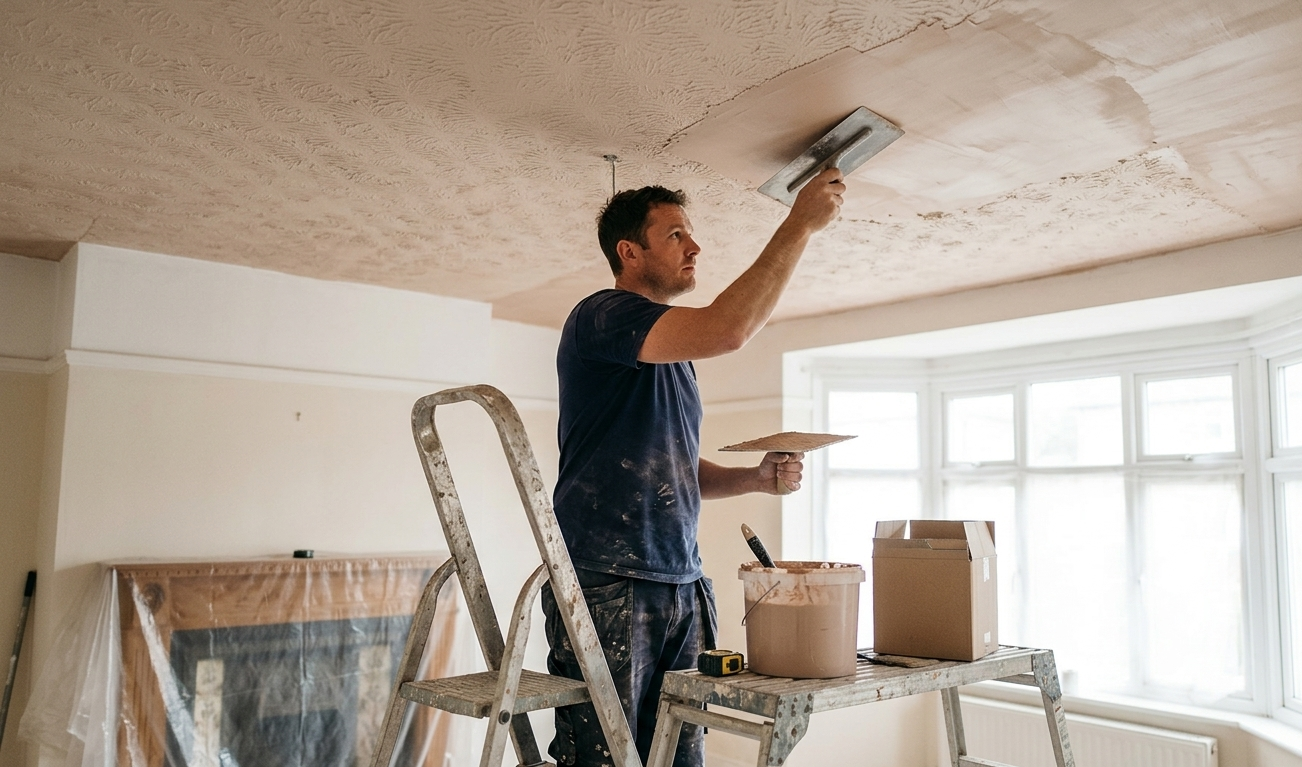
Plastering over an Artex ceiling is a practical way to modernise dated UK homes. Many ceilings still have textured finishes from past decades, yet smooth surfaces are now highly desired. In this guide, we explain how to plaster over Artex ceilings UK, including helpful tips, step-by-step techniques, and important considerations before starting.
If you require professional guidance on home ceiling updates, Heritage Plastering offers expertise for both historic and modern properties, ensuring a high-quality finish every time.
Why Plaster Over Artex Ceilings?
Artex ceilings were once popular because they could hide imperfections while adding decorative texture. However, tastes have shifted over the years, and smooth ceilings are now preferred. Consequently, plastering over Artex not only creates a clean, modern finish but also avoids the mess, cost, and potential hazards of removal.
Additionally, plastering helps prevent small cracks or imperfections from showing through, thereby ensuring a long-lasting, flawless finish. For tips on choosing the right approach, see choosing plastering services for your home renovation.
How to Plaster Over Artex Ceilings UK – Step by Step
Step 1: Assess the Ceiling and Check for Asbestos
Before beginning, it’s crucial to assess your Artex ceiling carefully. Ceilings installed before 1999 may contain asbestos, which poses a serious health risk if disturbed. Therefore, always get testing done first. If asbestos is present, plaster boarding over the surface is the safest method to modernise your ceiling without exposure risks.
Step 2: Prepare the Ceiling
Proper preparation is key to achieving a smooth, lasting finish. Start by removing any flaking Artex and lightly sanding raised areas. Then, seal the surface with PVA glue to help plaster adhere evenly.
Moreover, for guidance on tricky surfaces, see common plastering problems to avoid adhesion issues and cracking.
Step 3: Choose the Right Plastering Method
There are two main approaches, depending on texture and ceiling condition:
-
Skimming Directly Over Artex: Ideal for ceilings with light texture. Make sure the surface is sealed and smooth enough for plaster to stick.
-
Plasterboard Over Artex: Recommended for deep textures or heavily damaged ceilings. Fix boards to the joists, tape joints, and then skim for a flawless finish.
Step 4: Applying the Plaster
Apply the first coat evenly, then allow it to firm before adding the second coat. Working in sections helps avoid uneven areas, while proper lighting highlights imperfections early.
Best Ways to Plaster Over Artex Ceilings & Renovation Tips UK
Covering Artex Without Removal
If you prefer not to plaster directly:
-
Plasterboard Overlay: Attach boards over the ceiling, tape joints, then paint.
-
Decorative Panels: Instantly hide textures while adding style.
-
Thick Lining Paper: Suitable for minor textures on ceilings or walls.
Tips for a Long-Lasting Finish
-
Always seal Artex with PVA.
-
Use mesh tape over cracks.
-
Let plaster dry fully between coats.
-
Consult professionals if unsure — a plastering service near you provides skilled support.
Common Challenges & Solutions
Plaster Not Sticking: Dusty or porous Artex can prevent adhesion. Therefore, prep the ceiling thoroughly with PVA.
Cracks Appearing Later: Use reinforcement mesh and ensure proper drying between coats.
Asbestos Risk: If your ceiling is pre-1999, never disturb the Artex. Encapsulation or professional advice is the safest option.
Costs You Should Expect
Professional plastering over Artex usually costs £25–£50 per m². Complexity, ceiling height, and texture depth all influence pricing. Over boarding may cost slightly more but ensures a durable, long-lasting finish.
Design & Styling After Plastering
Once smooth, you can:
-
Paint for a clean, modern finish.
-
Add spotlights or chandeliers to enhance style.
-
Install decorative cornices to complement heritage homes.
FAQ
Q: Can I plaster over Artex if it contains asbestos?
A: Avoid disturbing asbestos. Encapsulation or plasterboarding is the safest approach.
Q: Is plastering better than removal?
A: Often yes — it is less disruptive and more cost-effective, especially if asbestos is present.
Q: How long does plaster take to dry?
A: Usually 24–48 hours, depending on thickness and conditions.
Q: Do I need a professional plasterer?
A: For textured ceilings, professional skills ensure a smooth, long-lasting finish.
Q: Can I paint Artex without plastering?
A: Yes, but the texture will remain visible. Thick paint or lining paper can help mask minor textures.