



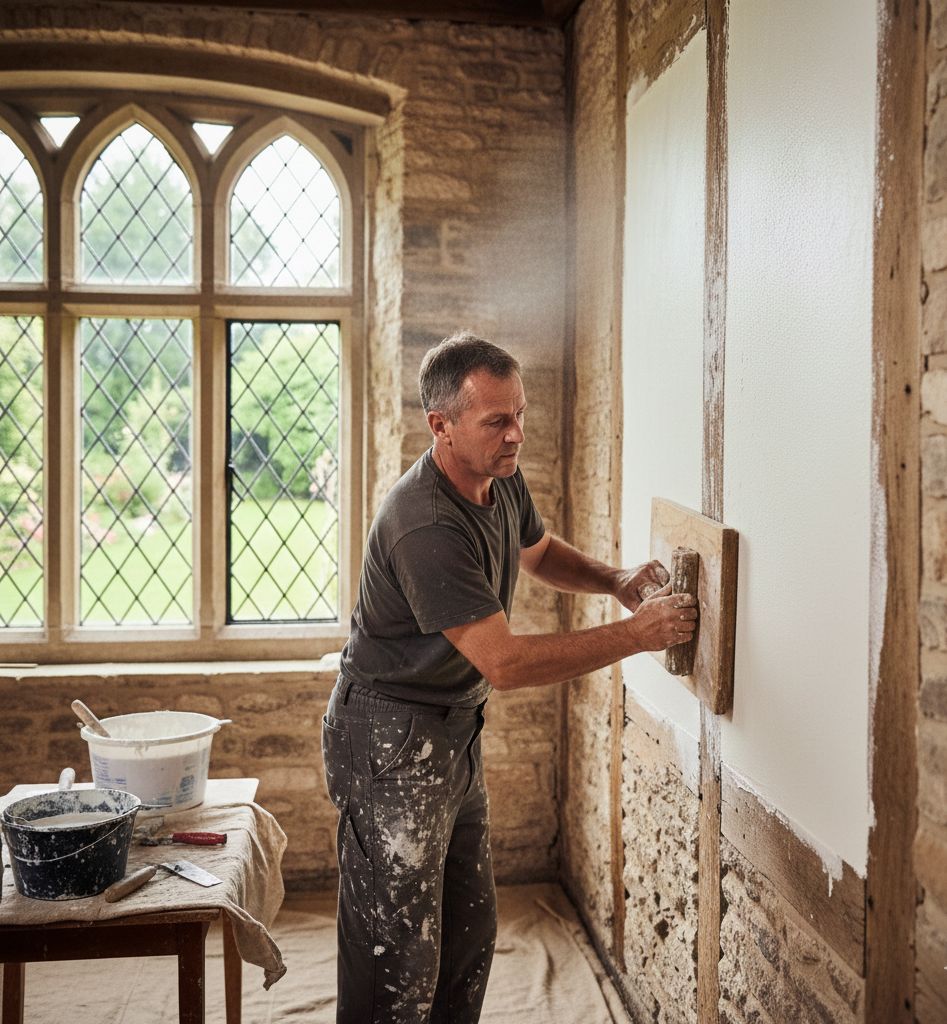
Effective moisture management is the technical foundation of successful lime and plaster applications. While Natural Hydraulic Lime (NHL) is prized for its vapor permeability and flexural strength, its performance is entirely dependent on how the system handles environmental and structural water. In Gloucestershire’s climate, where driving rain and high humidity are constant, understanding moisture vapor transmission rates is essential for any restoration or eco-build.
Failure to manage water effectively, whether through poor curing conditions or incorrect material specification, leads to delamination, efflorescence (salt staining), and significant thermal bridging. While modern gypsum or cement-based systems act as a barrier, traditional lime operates as a “moisture lung,” requiring a different approach to capillary suction and surface protection.
Understanding Lime & Plaster Water Interaction
One of the key benefits of lime plaster is its natural breathability. Unlike cement-based plasters that can trap moisture, lime plaster absorbs water vapor and releases it gradually, maintaining a balanced indoor environment and reducing the risk of damp-related problems.
This makes lime plaster particularly well-suited for:
-
Historic buildings with traditional masonry that requires moisture regulation.
-
Renovation projects where original wall fabrics must be preserved.
-
Sustainable construction projects that prioritize natural materials.
Modern plaster systems, such as gypsum and cement-based plasters, behave differently:
-
Gypsum plaster is highly sensitive to water. Excess moisture can degrade the plaster, leading to softening, cracks, and eventual failure.
-
Cement plaster is generally impermeable, which can trap moisture within the wall. Trapped water can cause structural issues and damage finishes over time.
Understanding these differences is crucial when planning both restoration and new construction projects. For historic properties, using lime plastering services ensures walls remain breathable while delivering a durable, smooth finish. Learn more about professional lime plastering in our Lime Plastering Services in Cheltenham page.
Why Water Management Matters
Effective water management in plaster is critical for:
-
Durability: Proper hydration and curing prevent cracks, shrinkage, and long-term deterioration.
-
Aesthetics: Moisture-related problems such as flaking, staining, and efflorescence compromise the wall’s appearance.
-
Indoor Air Quality: Lime plaster naturally regulates humidity, reducing condensation and preventing mold growth.
-
Structural Integrity: Moisture trapped behind impermeable plaster can damage masonry, compromise insulation, and lead to costly repairs.
Water management should therefore be considered at every stage of plastering: surface preparation, mixing, application, curing, and maintenance. See our Lime Plaster Guide for a detailed overview of lime plaster properties and best practices.
Surface Preparation
Proper surface preparation is the foundation of effective water management. Key steps include:
-
Inspect the substrate: Walls should be clean, sound, and free of loose material.
-
Pre-wet the wall: For lime plaster, slightly damp walls improve adhesion and hydration. Overly dry walls can draw moisture from the plaster, causing shrinkage and cracking.
-
Repair existing damage: Fill cracks or remove deteriorated plaster before applying new layers.
-
Check for damp issues: Rising damp, leaks, or penetrating damp must be addressed before plastering.
For modern plasters, surface preparation is equally critical. Gypsum or cement-based plasters require specific moisture levels to prevent cracking, peeling, or weak adhesion. Learn how to prepare walls professionally in our Modern Plastering Techniques guide.
Mix Consistency and Application
The correct water-to-lime ratio is essential for durability and flexibility:
-
Too much water makes plaster weak and prone to cracking.
-
Too little water makes plaster difficult to work with and reduces adhesion.
Lime plaster should have a creamy consistency while holding its shape. Multi-coat application is common for both strength and aesthetic finish. Proper layering reduces shrinkage and improves durability.
Modern plaster systems also require careful attention to mix consistency:
-
Gypsum plaster needs precise water ratios to avoid cracking and surface defects.
-
Cement plaster must be mixed for workability and strength without compromising water resistance. Explore multi-coat application in our Top 5 DIY Plaster Repair Mistakes guide.
Curing & Drying
Curing is a critical stage in water management:
-
Lime plaster sets slowly through carbonation, absorbing CO₂ from the air. Rapid drying caused by heat or direct sunlight can result in cracks.
-
Maintain consistent moisture during curing by misting walls or covering with breathable hessian.
-
For modern plasters, controlled drying prevents shrinkage, uneven textures, and surface cracking.
Proper curing ensures the plaster achieves maximum strength, flexibility, and durability.
Common Water-Related Issues
Rising Damp
Rising damp occurs when water moves upward from the ground. Lime plaster helps mitigate this by:
-
Allowing walls to breathe, releasing moisture gradually.
-
Reducing pressure on masonry compared to cement renders.
-
Working in combination with damp-proof courses for optimal protection.
Penetrating Damp
Water entering through roofs, gutters, or windows can compromise plaster. Lime plaster absorbs minor moisture and releases it naturally, protecting walls. Regular inspection of roofs, gutters, and external walls is essential.
Condensation
Condensation occurs when warm, humid air meets cold surfaces. Lime plaster mitigates condensation through moisture regulation, complemented by:
-
Ventilation
-
Insulation
-
Breathable coatings like limewash or mineral paints Explore breathable coatings in our Breathable Paint for Lime Plaster guide.
Best Practices for Water Management
-
Use breathable coatings: Limewash and mineral paints allow moisture to escape naturally.
-
Control environmental conditions: Avoid plastering during extreme heat or cold; maintain stable humidity.
-
Regular inspections: Detect cracks, flaking, or moisture ingress early.
-
Professional application: Skilled plasterers ensure correct mixing, layering, and curing for maximum longevity.
Choosing Between Lime and Modern Plaster
-
Historic Buildings: Lime plaster is ideal for breathability, flexibility, and masonry compatibility.
-
Modern Builds: Gypsum or cement-based plasters are suitable with careful moisture control, particularly in wet areas.
Hybrid approaches are sometimes ideal, e.g., lime plaster on heritage walls and modern plaster in dry areas. See our Lime Plaster vs Gypsum Plaster comparison for guidance.
Internal & External Water Management
External
-
Ensure gutters, downpipes, and drainage direct water away from walls.
-
Overhangs, landscaping, and protective coatings reduce water impact.
Internal
-
Maintain controlled indoor humidity.
-
Avoid non-breathable finishes that trap moisture.
-
Use limewash or mineral paints to complement lime plaster.
For maintenance tips, see Maintaining Lime Plaster.
Closing Thoughts
Proper water management is essential for long-lasting plaster finishes. By understanding plaster properties, implementing correct preparation, mixing, curing, and maintenance, and using professional guidance, you can prevent moisture-related problems.
Lime plaster naturally regulates moisture, preserves historic masonry, and ensures durable, attractive walls.
FAQ
Q1: Can lime plaster prevent damp issues?
Yes, lime plaster is breathable and regulates moisture, reducing rising or penetrating damp.
Q2: How long does lime plaster take to cure?
Carbonation typically takes several weeks, depending on temperature and humidity.
Q3: Can I use lime plaster in wet areas?
Yes, but areas with direct water exposure may need moisture-resistant lime or protective coatings.
Q4: Is modern plaster suitable for historic buildings?
Modern plaster can be used, but lime plaster is preferred for heritage renovations to prevent trapped moisture.
Q5: How do I maintain lime plaster walls?
Inspect regularly, repair cracks promptly, and use breathable paints or limewash.