



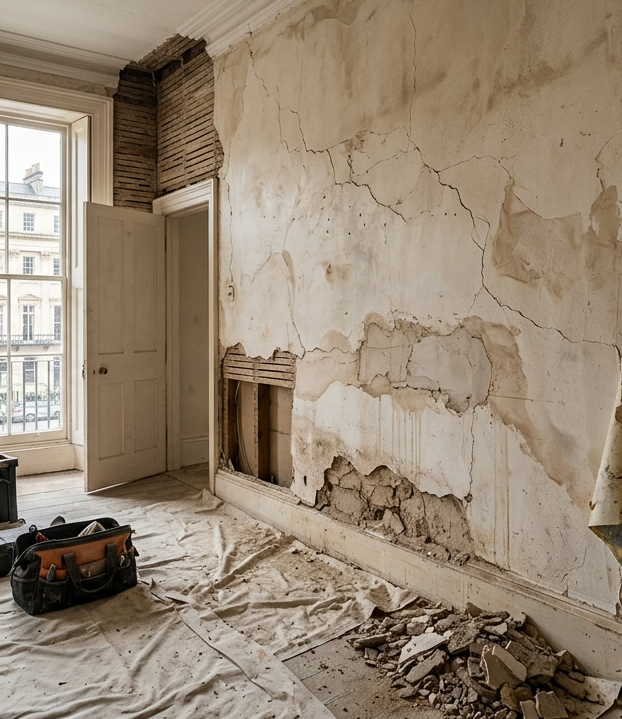
A fresh plaster job can completely transform a room. A poor one lingers for years. Cracks start to show within months, corners begin to crumble, and walls look uneven, especially in the afternoon light. Worse still, fixing someone else’s bad work almost always costs more than getting it done properly the first time.
Cheltenham sits at the crossroads of architectural styles. Georgian townhouses line the Promenade, Victorian terraces stretch through Leckhampton, and Cotswold stone cottages dot the surrounding villages. Each building type demands different skills, different materials, and different levels of expertise from a plasterer. Hiring someone who can skim a modern plasterboard wall does not mean they can restore a lime plaster ceiling in a Grade II listed property.
This guide walks you through seven questions you should ask every plasterer before you commit. These are the questions that separate the skilled professionals from the chancers, and they will save you money, time, and stress.
Question 1: What Types of Plastering Do You Specialise In?
Not all plastering is the same. The trade splits broadly into two camps: modern plastering (gypsum and cement based products) and traditional lime plastering. A plasterer who excels at boarding and skimming new builds may have zero experience with lime mortar.
In Cheltenham and the wider Gloucestershire area, this distinction matters enormously. If your property was built before the 1920s, it almost certainly used lime plaster originally. Applying modern gypsum over old lime can trap moisture, accelerate decay, and cause structural damage that takes years to become visible.
What to listen for: A good plasterer will ask about the age and construction of your property before quoting. They will mention specific products by name and explain why a particular plaster suits your walls. Vague answers like “we do everything” should raise a red flag.
Red flags: Anyone who suggests gypsum for a period Cotswold stone property either lacks heritage experience or is cutting corners.
Question 2: Can You Provide References or Examples of Similar Work?
Words are cheap. Past work speaks volumes.
Ask for references from projects similar to yours, both in scale and building type. If you own a Victorian terrace, you want to see evidence of successful work on Victorian terraces, not just photos of a newly skimmed garage.
A reputable plasterer in Cheltenham will have a portfolio, Google reviews, or at the very least, happy clients willing to vouch for them. Check their online presence. Look at Google Maps reviews for consistency. Ask whether you can visit a completed project in person.
Pro tip: Pay attention to how old the references are. A plasterer who can only show work from five years ago may have lost key team members or changed their methods since then.
Question 3: What Materials Will You Use, and Why?
This question separates the knowledgeable from the average.
A skilled plasterer will explain their material choices without prompting. For a modern home, they might recommend multi finish plaster for its smooth, durable finish. For a period property in the Cotswolds, they should recommend Natural Hydraulic Lime (NHL) or lime putty, depending on the substrate and exposure.
Materials matter because:
- Lime plaster breathes, allowing moisture to escape from old stone and timber walls
- Gypsum sets faster but traps moisture, which causes long term damage in older buildings
- Cement render is rigid and cracks when a period building moves naturally with temperature changes
- NHL based renders offer a balance between workability and durability for external applications
If your plasterer cannot explain why they have chosen a specific material for your project, they may be defaulting to whatever is cheapest or most familiar.
Question 4: Are You Insured, and What Does Your Insurance Cover?
Plastering involves scaffolding, heavy materials, and wet trades. Accidents happen. Water damage, structural mishaps, and personal injury are all real risks on a plastering job.
At a minimum, your plasterer should carry:
- Public liability insurance (minimum £1 million cover, ideally £2 million or more)
- Employer’s liability insurance if they use subcontractors or employees
- Professional indemnity insurance for specialist heritage work
Ask to see certificates, not just hear about them. Legitimate tradespeople will not hesitate to share proof. If someone bristles at this question, that tells you everything you need to know.
Cheltenham specific note: If your property is listed or in a conservation area, check whether the plasterer’s insurance covers heritage and listed building work. Not all standard policies do.
Question 5: What Is Your Availability and Realistic Timeline?
Good plasterers stay busy. If someone can start tomorrow, ask yourself why their diary is empty.
A realistic timeline depends on the scope of work. A single room skim in a modern property might take a day. A full lime replaster of a period home in Gloucestershire could take several weeks, with mandatory drying times between coats that cannot be rushed.
Typical timelines for Cheltenham projects:
| Project Type | Estimated Duration |
| Single room skim (modern plaster) | 1 to 2 days |
| Full room replaster (lime, 3 coat system) | 2 to 4 weeks |
| External lime render (one elevation) | 1 to 3 weeks |
| Victorian ceiling restoration | 1 to 2 weeks |
Ask whether the plasterer will work on your project continuously or juggle multiple jobs. Splitting attention between sites often leads to longer timelines and inconsistent quality.
For more detail on what to expect during replastering, see our guide on what to expect when replastering a period home in Gloucestershire.
Question 6: How Do You Handle Preparation and Cleanup?
Preparation accounts for roughly half the work on any plastering job. Skipping it leads to failure.
A professional plasterer will:
- Remove old, incompatible plaster before applying new material
- Assess the substrate for damp, loose masonry, or structural issues
- Apply appropriate bonding agents or scratch coats
- Protect floors, furniture, and fixtures with dust sheets
- Clean up thoroughly at the end of each working day
Ask specifically about surface preparation. On a period property, this might involve hacking off old cement render that is causing damp problems, treating timber laths, or installing new stainless steel fixings for mesh.
Warning sign: Any plasterer who quotes without inspecting the walls in person is guessing. And a guess is not a quote.
Question 7: What Is Included in Your Quote, and How Do You Handle Extras?
Plastering quotes vary wildly. Some include materials, labour, scaffolding, skip hire, and cleanup. Others cover labour only and leave you to source and pay for everything else.
Before you sign anything, clarify:
- Does the price include all materials?
- Are VAT and waste disposal included?
- What happens if the plasterer discovers unexpected damage behind existing plaster?
- Is there a day rate or a fixed project price?
- What are the payment terms? (Avoid anyone who demands full payment upfront.)
A transparent plasterer will provide an itemised quote. They will also explain how variations are handled. On older properties especially, hidden problems are common. Rotten laths, concealed pipework, and structural movement can all add to the scope once walls are opened up.
For a detailed breakdown of typical plastering costs in Cheltenham and Gloucestershire, refer to our pricing guide.
EEAT: Why Experience in Cheltenham Properties Makes the Difference
Heritage Plastering has spent over 15 years working on domestic and commercial properties across Cheltenham, Gloucestershire, and the Cotswolds. Our team holds CSCS certification and works to modern health and safety standards while using traditional materials and methods.
The most common mistake we encounter is gypsum plaster applied over old lime in period Cotswold homes. Homeowners often do not realise the damage until damp patches appear years later. By that point, the original stone substrate may have deteriorated, turning a simple replaster into a major restoration project.
We have restored lime plaster in Georgian townhouses on the Promenade, repaired lath and plaster ceilings in Victorian terraces, and applied NHL render to stone cottages across the Cotswolds. Every project starts with an honest assessment. If modern plaster is the right choice, we say so. If lime is essential, we explain exactly why.
Our approach is straightforward: inspect thoroughly, quote honestly, and deliver work that lasts. That is what separates a specialist from a generalist.
Frequently Asked Questions
How much does a plasterer cost in Cheltenham? Rates typically range from £150 to £300 per day for experienced professionals. Lime plastering costs more due to material prices and longer application times. Always get an itemised quote rather than relying on day rates alone.
How do I know if my home needs lime plaster instead of modern plaster? If your property was built before the 1920s, uses solid stone or brick walls, or is listed, lime plaster is almost always the correct choice. It allows walls to breathe and prevents trapped moisture from causing decay.
Should I choose a large plastering company or an independent plasterer? Size matters less than expertise. A small team with 15 years of heritage experience will outperform a large company that treats every job the same. Ask about their specific experience with properties like yours.
How long should I expect plastering to take? Modern skim coats dry within days. Lime plastering requires patience, with each coat needing proper curing time. A full three coat lime system on a single room can take two to four weeks from start to finish.
What qualifications should a plasterer have? Look for NVQ Level 2 or 3 in plastering, CSCS certification, and membership of trade bodies. For heritage work, experience with lime materials and knowledge of listed building regulations are equally important.
Choosing Your Cheltenham Plasterer: The Bottom Line
The right plasterer asks as many questions as you do. They inspect before they quote and explain their material choices. They show you similar completed projects and they stand behind their work with proper insurance and transparent pricing.
Cheltenham’s architectural diversity demands plasterers who understand both modern techniques and traditional methods. As more homeowners rediscover the benefits of lime plaster for period properties, the gap between specialists and generalists continues to widen.
Do not let price alone drive your decision. A cheap plastering job that fails within two years costs far more than a professional one that lasts decades. Ask the seven questions in this guide, compare the answers honestly, and invest in quality work that protects your property for the long term.
Ready to discuss your project? Contact Heritage Plastering for a free, no obligation consultation and honest assessment of your property.