



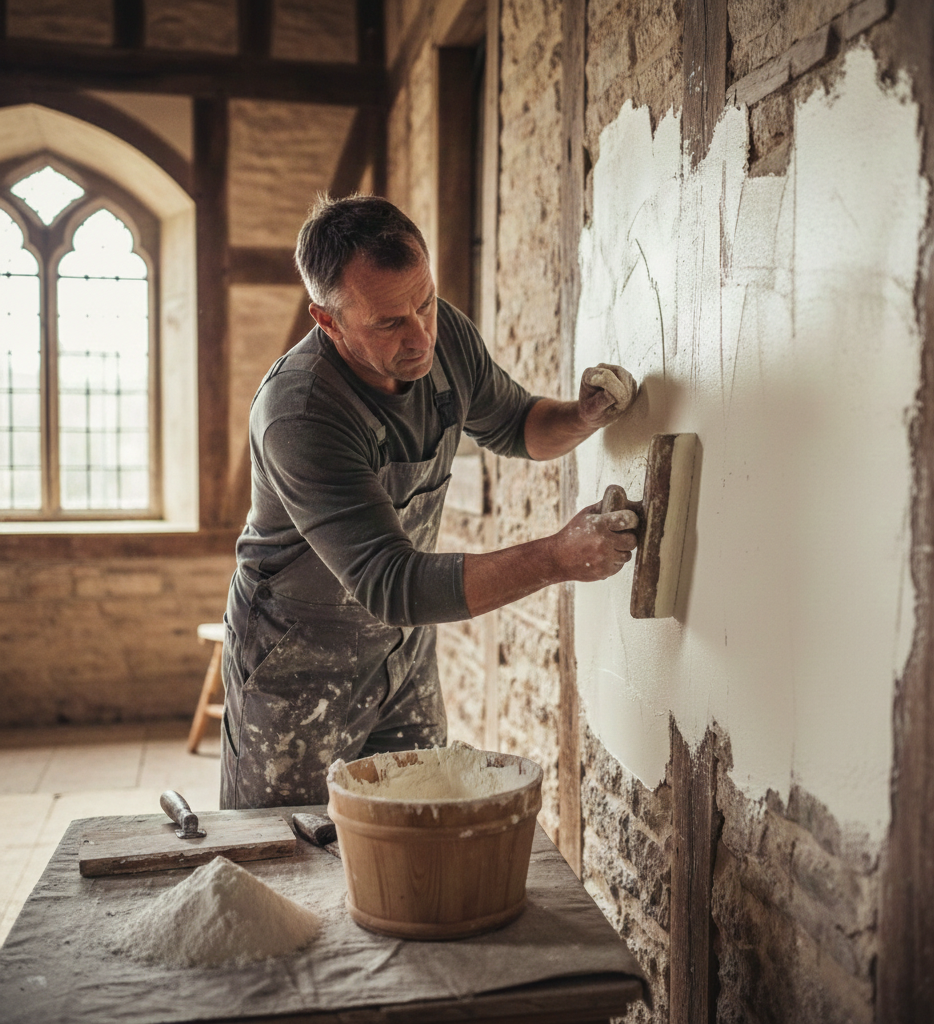
Lime plaster is a traditional wall finish made from limestone, water, and sand, valued for its high breathability, flexibility, and resistance to dampness. While modern gypsum and cement dominate new construction, lime remains the essential material for historic and listed properties that require moisture control.
Understanding the practical pros and cons of lime helps homeowners and builders protect traditional structures from water damage. This guide covers how lime plaster performs against modern alternatives, key application tips, and the specialist heritage plastering services needed to safeguard historic walls.
What Is Lime Plaster?
Lime plaster is a natural building material made from lime, sand, and water. Unlike cement-based plasters, lime plaster is breathable, allowing moisture to escape from walls while maintaining structural integrity. This property is crucial in older buildings where trapped moisture can lead to decay, mold, or damage to historic timbers.
Lime plaster is also flexible, accommodating slight building movements without cracking. This flexibility, combined with its durability, makes it a superior choice for heritage properties, listed buildings, and even modern eco-conscious projects. For a detailed look at lime plaster applications in historic homes, see Lime Plaster for Historic Homes in Cheltenham.
The Benefits of Lime Plaster
Lime plaster offers a wide range of advantages that modern materials often cannot replicate. From breathability to eco-friendliness, its qualities make it highly desirable in both traditional and contemporary construction contexts.
Breathability
One of the most celebrated features of lime plaster is its ability to allow moisture to escape naturally. Unlike cement plasters, which can trap water, lime plaster keeps walls dry and reduces the risk of damp, mold, and condensation. This makes it especially suitable for renovations of older properties where moisture management is critical. Learn more about managing damp in heritage properties at Maintaining Lime Plaster.
Durability and Strength
Lime plaster strengthens over time through a process called carbonation, gradually absorbing carbon dioxide from the air. This not only solidifies the plaster but also enhances its resilience without compromising flexibility. Traditional cement plasters may harden faster but are more prone to cracking, particularly in buildings with movement or settlement issues.
Flexibility and Adaptability
Its natural flexibility allows lime plaster to adapt to uneven or textured surfaces, making it ideal for both new and restoration projects. Whether you’re replastering a period property or finishing a modern lime-rendered wall, lime plaster can accommodate subtle structural shifts without cracking.
Sustainability
With growing awareness of environmental impact, lime plaster is increasingly appreciated for its eco-friendly properties. Made from natural ingredients, it has minimal carbon footprint compared to cement-based alternatives. Additionally, lime plaster can absorb indoor pollutants, contributing to healthier indoor air quality. For energy-conscious homeowners, Insulated Lime Renders in Gloucestershire offer both breathability and thermal efficiency.
Aesthetic Appeal
Lime plaster provides a natural, textured finish that adds warmth and character to interiors. Its subtle variations and soft tones complement period features, decorative cornices, and traditional ceiling designs. For example, lime plaster is ideal when restoring ornate plasterwork such as Victorian ceilings, maintaining historical authenticity while providing a durable finish.
Pluses of Lime Plaster
When evaluating lime plaster, its long-term benefits often outweigh initial material and labor costs. Key advantages include:
-
Breathability: Reduces damp and mold risks.
-
Flexibility: Adapts to structural movement, minimizing cracks.
-
Durability: Gains strength over time and can last decades.
-
Sustainability: Low environmental impact and contributes to indoor air quality.
-
Aesthetic Value: Offers natural finishes suitable for heritage and modern projects.
Many professionals recommend natural hydraulic lime (NHL) for projects requiring quicker setting times and added strength. This variant combines traditional benefits with modern efficiency. Additionally, lime plaster can be coloured, textured, or patterned for decorative finishes, adding depth and individuality to walls. For more on choosing lime plaster over gypsum, see When to Choose Lime Over Gypsum.
Minuses of Lime Plaster
Despite its numerous advantages, lime plaster has certain challenges that should be considered before committing to a project:
Long Setting Time
Lime plaster sets slowly compared to gypsum or cement plasters. This means projects require patience, particularly for thicker coats or complex decorative finishes.
Specialist Skills Required
Applying lime plaster properly requires experienced craftsmen. Improperly applied plaster can lead to cracking, uneven finishes, or reduced longevity. Heritage Plastering employs trained professionals skilled in traditional and modern techniques to ensure a high-quality result. Explore our Lime Plastering Services in Cheltenham and Gloucestershire for expert application.
Higher Initial Cost
Material and labor costs are generally higher than modern plasters. However, these are often offset by the long-term durability, reduced maintenance, and energy efficiency benefits of lime plaster.
Limited Compatibility with Modern Materials
Lime plaster is not always compatible with highly sealed modern surfaces like concrete or synthetic boards. Careful preparation and professional guidance are required to ensure proper adhesion and performance. See Can You Put Lime Render Over Cement Render? for guidance on combining lime plaster with modern materials.
Applications of Lime Plaster
Lime plaster is highly versatile and can be used in a range of building projects:
-
Heritage Renovation: Preserves historical features while improving wall performance.
-
New Builds: Breathable lime plaster can enhance sustainability and indoor air quality.
-
Bathrooms and Kitchens: When combined with appropriate sealing, lime plaster can be moisture-resistant. See Can Lime Plaster Be Used in Bathrooms and Kitchens? for more details.
-
Decorative Finishes: Suitable for textured, coloured, or patterned surfaces to enhance aesthetics.
Why Choose Lime Plaster?
Selecting the right plaster involves balancing cost, performance, and aesthetics. Lime plaster is particularly suitable for:
-
Older or Heritage Buildings: Its breathability protects historic timbers and masonry.
-
Sustainable Construction: Low environmental impact and improved indoor air quality.
-
Long-Term Durability: Flexibility reduces cracking, and carbonation strengthens surfaces over time.
While gypsum and silicone-based modern plasters offer speed and convenience, they cannot replicate the long-term benefits of lime plaster, particularly in moisture management and flexibility. Homeowners seeking sustainable, moisture-resistant solutions often choose lime plaster as a long-term investment. Learn more about Why Lime Plaster Is a Sustainable Choice for Modern Homes.
Common Myths About Lime Plaster
Despite its widespread use, lime plaster is sometimes misunderstood. Here are some common myths debunked:
-
Myth: Lime plaster is outdated and unsuitable for modern homes.
Reality: Lime plaster is versatile and can be adapted to contemporary projects with proper preparation. -
Myth: It is weak and prone to damage.
Reality: Lime plaster strengthens over time and is more flexible than cement, making it resistant to cracking. -
Myth: Lime plaster is difficult to maintain.
Reality: With proper application and periodic upkeep, lime plaster can last for decades. For a detailed discussion, see Myths About Lime Plastering Debunked.
Closing Thoughts
Lime plaster is a timeless material combining practicality, beauty, and sustainability. Its breathability, durability, and eco-friendliness make it ideal for:
-
Heritage renovations
-
New eco-conscious builds
-
Decorative wall finishes
Although it requires patience and skilled application, the long-term benefits outweigh the initial investment. Consulting professionals ensures a quality finish, longevity, and adherence to heritage or building regulations. Explore Heritage Plastering’s Plastering Services for expert advice and skilled application across Gloucestershire and the South West of England.
FAQ:
Q1: Is lime plaster suitable for modern homes?
Yes, particularly for breathable walls. Sealed walls may require surface preparation to ensure proper adhesion.
Q2: How long does lime plaster take to dry?
Setting can take several weeks depending on thickness, humidity, and ventilation.
Q3: Can lime plaster prevent damp?
Yes, its breathability allows moisture to escape, reducing condensation and mold growth.
Q4: Is lime plaster more expensive than gypsum plaster?
Initial costs are higher, but durability, reduced maintenance, and eco-benefits often make it cost-effective in the long term.
Q5: Where can I find skilled lime plasterers?
Heritage Plastering provides trained professionals for restoration, new builds, and sustainable projects.
Q6: Can lime plaster be used on ceilings?
Yes, it’s ideal for historic ceilings and can be repaired with specialist techniques. Refer to 10 Ways to Repair Lath and Plaster Ceilings