




Modern plastering blends craftsmanship, precision, and the right tools. Trowel & float techniques for modern plaster remain at the core of a professional finish, no matter if you’re refreshing a modern home or carrying out heritage building repairs in Gloucestershire. These techniques may look straightforward, but achieving a flawless result takes skill, timing, and experience.
When used together, the trowel shapes and applies the plaster, while the float perfects the surface. If either step is rushed or done incorrectly, you risk ridges, uneven thickness, or a surface that cracks over time. For homeowners in Cheltenham, Gloucester, and the wider Cotswolds, choosing an experienced plasterer ensures these tools are used to their full potential.
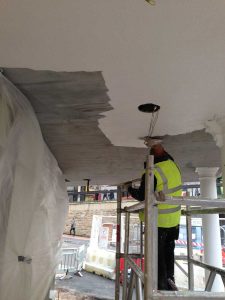 Getting the Trowel Technique Right
The trowel is the workhorse of plastering. A skilled plasterer will load it cleanly from the hawk, hold it at the right angle, and apply consistent pressure. This is especially important when working on projects like lime plaster restoration in Cheltenham, where every layer must bond evenly to the wall.
Holding the trowel at around 15–20 degrees to the surface allows smooth spreading without dragging. Long, overlapping passes prevent thin lines between strokes. Pressure is key: too much and you risk gouging; too little and you’ll leave weak spots.
Professionals also understand the importance of timing. For example, if you’re working on plaster repairs in Gloucester, you need to return to certain areas at the correct stage of setting to refine them without damaging the surface.
Perfecting the Float Technique
The float’s role is to compact and refine the plaster. For most modern projects, a plastic float gives a smooth finish, while a sponge float adds texture. If you’re aiming for a more decorative surface, like in a Venetian plaster project in the Cotswolds, the float technique can create unique depth and character.
Floating should start when the plaster is firm yet still workable. Starting too soon risks tearing; leaving it too late makes adjustment impossible. Gentle, circular motions even out the surface and bring finer particles to the top. A final light skim with the trowel then removes float marks.
For homeowners searching for plastering services in Cirencester, this attention to timing and technique is what delivers a truly professional finish.
Modern Uses for Trowel & Float Work
These techniques aren’t just for smooth walls. They’re essential for decorative finishes, exterior rendering, and protective coatings. In external rendering projects across Gloucestershire, the right float work can help weatherproof your property while keeping the finish crisp and clean.
Inside, trowel and float work can transform a kitchen or living space with polished surfaces or subtle texture. For period properties, the same skills are used in restoring listed buildings so new work blends seamlessly with the old.
Why Technique Matters for Durability
Poor technique doesn’t just affect appearance: it impacts durability. Uneven trowel work can cause cracks, over-floating can weaken the surface, and improper timing can cause peeling.
When applied correctly, modern plaster stands up to wear, resists moisture problems, and retains its appearance for years. This is why it pays to choose an experienced team!
Trowel & Float Techniques for Modern Plaster: Choosing Professional Plastering in Gloucestershire and the Cotswolds
Plastering is a craft built on precision and practice. Local experts with a track record in both modern and historic properties know how to adapt techniques for the project. We choose the right plaster for the space, prepare surfaces thoroughly, and work with accuracy from start to finish.
Heritage Plastering has completed everything from lime render restoration in Painswick to high-end modern finishes in Cheltenham townhouses. Every project is approached with the same attention to detail, ensuring the finish looks exceptional and lasts for decades.
If you want to see our work, book a consultation, or discuss your project in person, you can visit us on Google Maps and see our reviews. We’re happy to offer advice, provide a free no-obligation quote, and help you choose the best trowel and float finish for your property!