



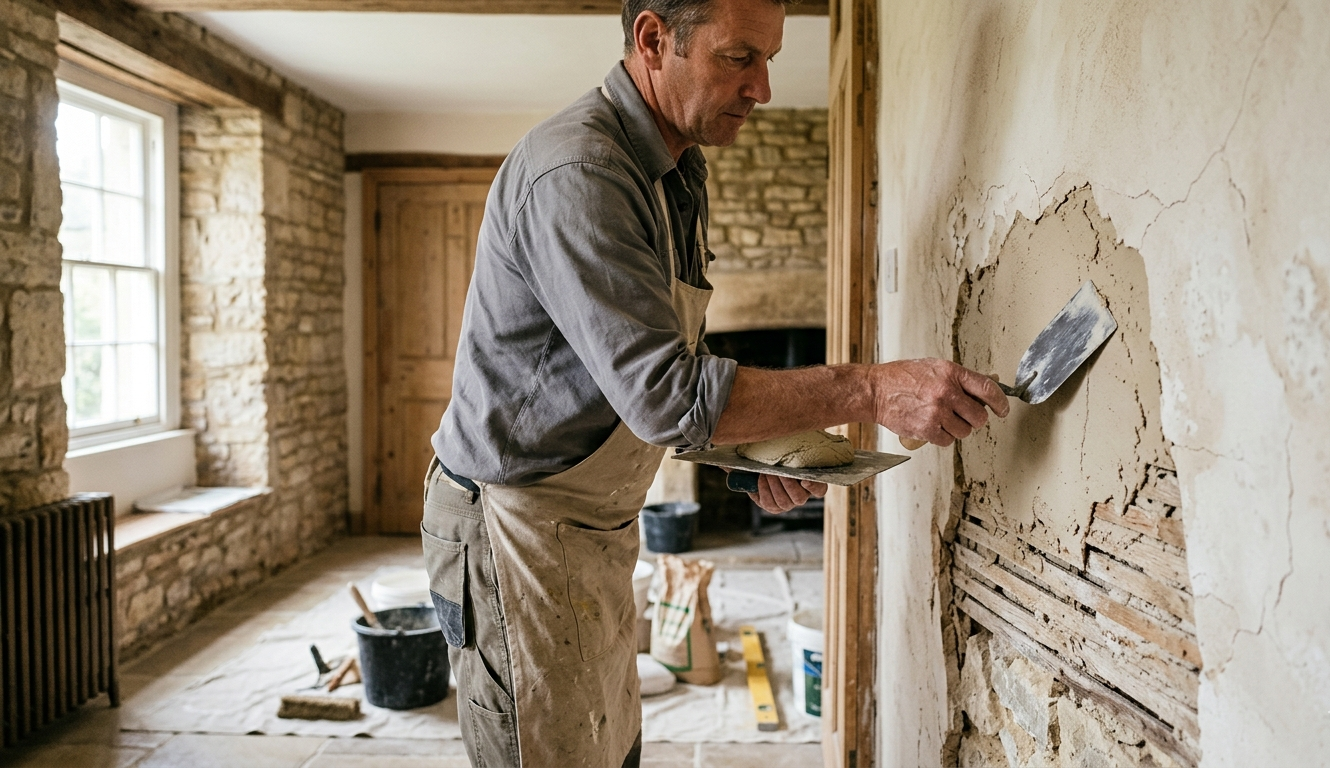
If you’ve found hollow, bubbling, or detached plaster on a period property in Cheltenham, you’re dealing with blown lime plaster. It’s one of the most common issues in older homes across Gloucestershire, and knowing what the repair will cost before calling a specialist saves time and stress. This guide lays out honest 2026 pricing, the factors that move costs up or down, and why choosing the right plasterer matters as much as the price itself.
What Does Blown Lime Plaster Repair Actually Cost in Cheltenham?
Pricing for blown lime plaster repair in Cheltenham typically falls between £45 and £85 per square metre for standard repair work, though several variables push that figure in one direction or another. Small patch repairs on a single wall section might cost £200 to £500 for the job. Larger areas, including full room replasters in a period property, can reach £2,500 to £6,000 or more depending on access, condition, and finish required.
Day rates for skilled lime plasterers in the Cheltenham area run from £250 to £400. Bear in mind that lime work is slower than gypsum. Proper application involves multiple coats, each needing time to cure before the next goes on. That’s not inefficiency it’s the process done correctly.
If you want a broader sense of what plastering costs across different project types, the guide to plastering service costs gives useful benchmarks for budgeting before you request quotes.
What Makes Blown Lime Plaster Repair Costs Go Up?
Extent of the Damage and Substrate Condition
The more blown the plaster, the higher the cost. Tapping across a wall to map hollow sections is the first step on any survey. A small patch behind a radiator is very different from a whole ground floor that has delaminated over decades of trapped moisture.
Substrate condition matters too. If the laths beneath are rotted, broken, or missing, they need replacing before any new plaster goes on. Lath preparation adds both materials and labour time. On timber-framed or wattle-and-daub backgrounds, the work requires even more care.
Anything that requires working at height, such as ceiling repairs, takes longer and carries additional risk. Lath and plaster ceiling repair is a specialised task one where cutting corners creates serious structural risk overhead.
The Lime Specification Required
Not all lime plasters are the same. A standard NHL 3.5 system for a rural barn conversion sits at a different price point from a traditional lime putty mix required for a Grade I listed interior. Materials cost more, mixing is more technical, and application requires greater skill.
Properties in the Cotswolds often sit within conservation areas where specific specifications apply. The plasterer needs to understand which binder, aggregate, and mix ratio are appropriate for each substrate not just pick whatever is on the merchant’s shelf.
Accessibility and Scaffolding
Ground floor walls are straightforward. A two-storey gable end or a vaulted ceiling in a Georgian townhouse is not. Scaffolding, hop-ups, and access towers all add to the project total. Always ask whether access equipment is included in the quoted price or billed separately.
Is It Worth Repairing Rather Than Replacing?
In most period properties, yes repair is the better path. Original lime plaster has a different texture, density, and acoustic quality to anything you can replicate with modern materials. Removing it wholesale from a listed building may also require Listed Building Consent, making it legally complicated as well as expensive.
Spot repairs and consolidation of sound existing plaster preserve what’s there. A skilled plasterer can blend new lime into old in a way that’s nearly invisible once finished. If you’re unsure whether your walls are worth saving or need a full strip-out, a proper condition survey from a specialist makes the decision much clearer.
Understanding common plastering problems in period Cotswold homes gives a useful overview of what typically causes deterioration and what repair approach fits each scenario.
How to Get an Accurate Quote for Lime Plaster Repair in Cheltenham
Vague quotes lead to budget surprises. When contacting plasterers, be specific about the following:
The property age and construction type. Whether any part of the building is listed. The approximate area of blown plaster. What finish you need smooth, textured, or sand-faced. Whether you’ve noticed damp, staining, or mould alongside the blown plaster.
That last point matters. Blown plaster and damp often arrive together. If moisture is the underlying problem, fixing the plaster without addressing the source is a short-term fix. A good specialist will want to understand why the plaster blew in the first place before quoting for repair.
Lime plaster water management covers the relationship between moisture, breathability, and why the wrong repair approach can make damp problems worse, not better.
Why Cheaper Isn’t Always Cheaper?
The temptation to go with the lowest quote is understandable. But lime plastering is a specialist trade. A plasterer who applies gypsum or sand-cement to a period wall might charge less upfront, but the incompatibility of those materials with old stone or brick causes damage that costs far more to fix later.
Trapped moisture, salt crystallisation, and loss of structural bonding are all consequences of using the wrong material. In a listed property, the damage can extend to regulatory problems with the local conservation officer. Selecting someone who genuinely understands lime its mixes, curing conditions, and appropriate substrates is not optional on a heritage property.
If you’re weighing up your options for a renovation in Gloucestershire, reading about what to expect when replastering a period home helps set realistic expectations before work begins.
FAQ
How do I know if my lime plaster is blown?
Tap the surface gently with your knuckles. A dull, hollow sound indicates the plaster has detached from its background. Visually, you may notice bubbling, cracks running in a map pattern, or plaster that flexes slightly when pressed.
Can I repair blown lime plaster myself?
Small patches are possible for experienced DIYers, but lime plaster has a specific mixing and application process. Incorrect mixes, wrong curing conditions, or incompatible backgrounds cause repairs to fail quickly. For anything larger than a minor patch, specialist help is advisable.
How long does a lime plaster repair take to dry?
Each coat of lime plaster needs time to carbonate and cure before the next coat is applied. A full three-coat system can take several weeks from start to finish. Rushing the process causes cracking and failure.
Will my insurance cover blown lime plaster repair?
Rarely. Most home insurance policies treat plaster deterioration as wear and maintenance rather than sudden damage. Check your policy documents, but don’t expect standard cover to apply.
Does blown lime plaster always mean there’s a damp problem?
Not always, but frequently. Blown plaster in older buildings often results from moisture movement through the wall, previous inappropriate repairs using cement, or condensation. A specialist should assess the cause before repair work begins.
Closing Thoughts
Blown lime plaster repair in Cheltenham in 2026 sits within a wide price range depending on the scale, specification, and condition of the property. Expect to pay more for a specialist with proven heritage experience than for a general builder and expect that investment to hold up far longer. Get condition surveys done before agreeing to quotes, confirm that the plasterer understands lime, and make sure any underlying damp issue is resolved before new plaster goes on.
Heritage Plastering has over 15 years of experience working on period and listed buildings across Cheltenham, Gloucestershire, and the Cotswolds. Contact us today for a site visit and an honest, detailed quote for your blown plaster repair.