



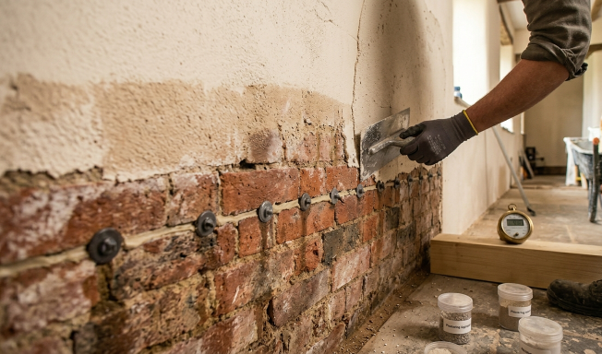
Damp walls in an old Cotswold cottage require a different approach than modern homes because solid stone walls need to breathe. Applying modern gypsum plaster or impermeable tanking systems to these walls can violate heritage regulations and make damp problems worse. Traditional Cotswold rubblestone cottages rely on vapor permeability to allow moisture to evaporate naturally through the building fabric. When non-breathable materials seal these porous stone walls, they trap moisture inside the masonry, accelerate stone decay, and force rising damp higher up the walls. To comply with listed building requirements and protect the property’s structure, any internal damp repairs should use compatible breathable lime mortars instead of modern synthetic barriers. This approach helps prevent long-term structural damage and reduces the risk of local authority enforcement.
Historic homeowners frequently struggle with internal moisture during damp English winters. Seeing salt bubbles, peeling paint, and cold patches on solid stone leads many to seek immediate solutions.
Heritage Plastering’s focus remains on restoring historical breathability through authentic craftsmanship and time-tested mineral compounds. Selecting an incorrect contemporary patch kit ruins the architectural integrity of your home and creates serious legal liabilities.
Listed Building Plastering Rules and Moisture Movement
Understanding how traditional rubblestone construction interacts with regional weather patterns requires discarding modern cavity wall assumptions. Old buildings function as an open moisture reservoir, absorbing seasonal rainfall externally and releasing it invisibly via internal evaporation.
When homeowners use modern gypsum plasterboard or hard cement over porous limestone, they block this natural cycle completely. The trapped wetness builds up inside the masonry core until it breaks through as structural rot.
The process of deterioration moves steadily from the outer stone substrate through to the interior living space. This path traps dampness behind the dense gypsum barrier, directly rotting the structural timber elements buried within the stone.
Statutory framework guidelines mandate that all repairs to designated heritage assets must protect this natural vapor exchange. Introducing non-permeable layers alters the physical performance of the building, which legally requires prior regulatory consent.
The True Cost of Incompatible Modern Building Materials
Using modern trade shortcuts on a period structure causes severe physical damage to historic wall coatings. While gypsum mixes are cheap and quick to apply, their rigid chemical makeup is completely incompatible with soft limestone.
Over a short period, trapped ground moisture dissolves the natural binders in old mortars. This causes the interior finish to lose adhesion, split away from the background, and eventually collapse entirely.
Evaluating Hydraulic Binders Against Soft Putty
Choosing the right type of traditional binder is essential for managing moisture in solid masonry. Home owners frequently compare NHL 3.5 vs NHL 2 lime plaster to find the correct structural strength and flexibility for their project.
Natural hydraulic lime provides excellent moisture resistance, making it ideal for damp external walls or cellar spaces. Pure fat lime putty cures much slower but offers the superior flexibility needed for internal timber lath ceilings.
The Physics of Mechanical Keying and Aggregate Mixes
A traditional three-coat application relies entirely on mechanical bonds rather than modern synthetic adhesives. Coarse hair mixed into the base coat acts as an internal mesh, binding the wet material together across irregular stone gaps.
A master plasterer builds durability step by step. The work begins with thorough stone substrate preparation, moves to a heavy hairy scratch coat, transitions into a floating intermediate layer, and finishes with a fine finish skim.
Using poorly graded sand or omitting the traditional animal hair weakens the cured tensile strength of the mix. This causes fine surface cracks to form, allowing ambient condensation to seep behind the plaster face.
Why Common Injected Damp Proofing Fails in Old Cottages
The UK restoration market often promotes chemical injection creams and plastic tanking membranes as standard solutions for rising damp. However, forcing chemical barriers into an ancient solid stone foundation simply diverts the rising ground moisture elsewhere.
Water naturally finds the path of least resistance, pushing higher up the wall until it passes above the new chemical layer. This leaves home owners with worse damp patches further up their walls while permanently trapping salt inside the lower stones.
Resolving Cement Disasters on Porous Masonry
When past renovations have introduced hard external mortars, the internal surfaces always suffer. Property owners must understand how cement render creates damp walls before attempting to fix internal finishes.
Trapped moisture behind external cement is forced inward, overloading the breathability of internal finishes. Removing these non-porous exterior barriers is the first step toward drying out the living space safely.
The Dangers of Using Modern Impermeable Paints
Finishing a newly installed traditional surface with standard vinyl emulsion paints undoes all the benefits of breathable plastering. Plastic paint films create an airtight skin that traps vapor directly beneath the finished surface.
As the trapped moisture struggles to escape, it pushes the paint film away from the wall, causing flaking and blistering. Period homes must be finished with traditional mineral paints or limewashes to allow natural vapor evaporation.
Navigating Listed Building Consent for Damp Repairs
Many homeowners mistakenly believe that internal damp proofing can be carried out under standard permitted development rights. In reality, applying waterproof tanking slurries or changing the fabric of a listed property without approval is a criminal offense.
Local conservation officers across Gloucestershire carry out regular inspections to ensure protected properties are repaired using authentic methods. Unauthorized modern alterations can result in costly enforcement notices requiring you to remove the new work.
Heritage Advisory Note: The Society for the Protection of Ancient Buildings states that using inappropriate modern cement or gypsum on solid historic walls is the leading cause of preventable structural decay in period homes.
To ensure your project remains compliant, it is essential to follow a professional, step-by-step restoration checklist:
- Document the precise underlying cause of the moisture ingress before stripping any surfaces.
- Check local planning portals to confirm if your planned work falls under like-for-like maintenance rules.
- Source local aggregates and authentic binders that match the historical makeup of the property.
- Keep detailed records of all material mixes and batches used for future property validation.
Frequently Asked Questions About Cottage Dampness
Can I apply an internal waterproofing slurry to stop a stone wall from sweating?
Applying waterproof slurry or tanking creams to a listed stone wall is highly damaging. This forces moisture deeper into the porous rubblestone core, where it causes hidden wood rot in floor joist ends and accelerates masonry decay through freeze-thaw cycles.
How can I verify if my current wall coating is lime or modern gypsum?
A simple test involves placing a small crumb of the original plaster into a glass of household white vinegar. Authentic traditional lime will bubble and dissolve completely, whereas modern synthetic gypsum will remain solid and unaffected by the acid.
Why do white salt crystals keep appearing on my new internal finishes?
Efflorescence occurs when drying moisture draws natural ground salts out through the porous masonry to the surface. These harmless mineral deposits should be brushed away dry; applying a wet cloth will simply dissolve the crystals back into the wall fabric.
Are there financial assistance options for structural damp remediation in the region?
Financial help is sometimes available for major conservation projects on historic buildings through preservation funds. Property owners can check if their project qualifies for support by researching grants for listed building repairs through local heritage channels.
Protecting the Fabric and Value of Your Cottage
Remediating damp issues in a traditional stone cottage requires identifying the source of the moisture rather than simply blocking it with synthetic coatings. Trying to save time with modern gypsum plasters causes long-term structural issues and introduces serious legal risks for listed buildings. Using authentic, vapor-permeable lime mortars protects your home’s structural health and ensures your renovation remains fully compliant with conservation laws.
Reviewing an updated lime plaster guide helps clarify material specifications and curing timelines before choosing a restoration strategy. Working with experienced heritage specialists prevents costly mistakes and safeguards your property investment. Contact our conservation team today to schedule an on-site survey and secure a detailed quote for your period home.