



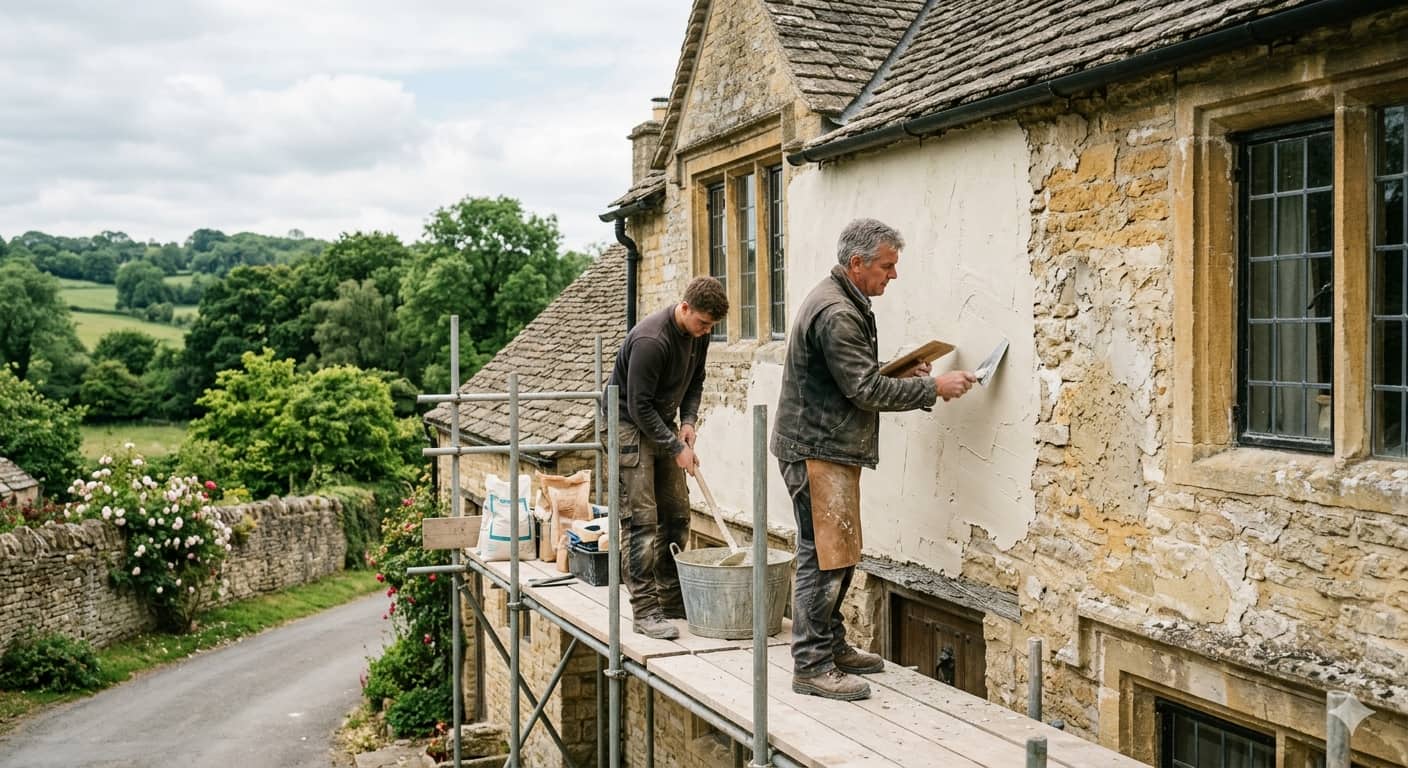
Do You Need Planning Permission to Replaster or Render a Listed Building in Gloucestershire?
If you own a listed building in Gloucestershire, you face additional considerations for most property decisions. Contractors often treat replastering or rendering as routine maintenance, but listed building rules differ significantly from standard renovations. Mistakes can trigger enforcement action, require costly removal work, and damage the building’s historic fabric.
Heritage Plastering regularly works with listed and historic property owners across Gloucestershire. Clients often ask before work starts whether they need permission. The answer depends on the scope of work, the materials used, and whether the work affects the building’s character.
Planning Permission and Listed Building Consent: What Applies When Replastering a Listed Building in Gloucestershire
Planning permission and listed building consent are two separate things, and it is important to understand the difference before you start any plastering or rendering work.
These permissions generally relates to changes in the use of a building or significant external alterations that affect its appearance in the wider environment. Listed building consent, on the other hand, covers any works that would affect the character of a listed building, both internally and externally. This is the one that most owners of historic homes need to think about.
Under the Planning (Listed Buildings and Conservation Areas) Act 1990, it is a criminal offence to carry out works that affect the character of a listed building without first obtaining listed building consent. This includes internal work. Replastering an internal wall with the wrong material, for example replacing traditional lime plaster with modern gypsum, could constitute an unauthorised alteration even though it is hidden from view.
The key phrase is “affects the character.” Contractors who repair a small patch of lime plaster like-for-like using original materials and methods usually treat the work as routine maintenance, so it does not require consent. However, if they change the scope, method, or materials from the original construction, they move into work that likely requires consent.
When Does Lime Plaster Work Require Listed Building Consent?
Contractors usually need listed building consent when they remove existing lime plaster and replace it with a different material. They also need consent when they apply cement render to stone or brick that never previously had it. Changing the profile or texture of external render coats also triggers consent requirements. Repointing or re-rendering an elevation in a noticeably different style also requires approval.
Internal replastering with lime to repair like-for-like damage is usually acceptable without formal consent, but it is always worth confirming with your local planning authority before starting. In Gloucestershire, this means contacting Cotswold District Council, Stroud District Council, or whichever authority covers your area.
Even where consent is not formally required, using the correct materials matters enormously. Lime plaster in historic buildings is not just a heritage preference. It is how the building breathes, manages moisture, and stays structurally sound over time.
Why the Material Choice Matters as Much as the Permission?
There is a reason that historic England and local conservation officers consistently specify lime-based products for listed buildings. Older structures, particularly those built before 1919, were designed to function with breathable materials throughout. The walls absorb and release moisture naturally, and the plaster plays a central role in that cycle.
When cement render or modern gypsum plaster is introduced into this system, moisture becomes trapped. Over time this leads to damp patches, spalling stonework, and in serious cases structural deterioration. The damage is not always visible immediately, which is why so many owners only discover the problem years after incorrect materials were applied.
Understanding why lime plaster is essential for listed and heritage buildings goes beyond compliance. It is about protecting a building that was designed to work in a very specific way.
What Happens If You Do Work Without Consent?
Listed building enforcement has no time limit. Unlike some planning breaches that become immune from enforcement after four or ten years, unauthorised works to a listed building can be pursued indefinitely. This means that work carried out decades ago can still be subject to an enforcement notice requiring reinstatement.
If you buy a listed building where previous owners have applied cement render without consent, you as the new owner inherit that liability. It is one reason why pre-purchase surveys and searches on listed buildings are so important.
The penalties for unauthorised works can include unlimited fines and in serious cases prosecution. Local authorities in Gloucestershire have become increasingly active in pursuing enforcement, particularly where modern materials have been used in ways that cause damage to historic fabric.
Working With Your Conservation Officer
Conservation officers do not obstruct work; they support appropriate repairs. They often help when you approach them early with a clear, material-appropriate plan. Heritage Plastering regularly liaises with local conservation officers for clients and prepares documentation and material specifications before work starts.
A pre-application consultation usually proves worthwhile. It gives clarity before you spend money and creates a record that protects you later. Conservation officers often confirm in writing that like-for-like repairs do not require consent, and this confirmation provides valuable protection.
For owners considering larger projects, understanding heritage building repairs in Gloucestershire and the process involved can save significant time and money further down the line.
External Rendering on a Listed Building: Extra Considerations
External rendering on a listed building attracts more scrutiny than internal work, especially where builders originally left stonework unrendered. Adding render where none existed historically almost always requires listed building consent, regardless of material choice.
Where render does exist historically and you are repairing or replacing it, the situation is more nuanced. A like-for-like repair using a matching lime mix may be acceptable as maintenance. Replacing the entire elevation in a new mix or changing the finish texture will likely need consent.
Lime render versus cement render is not just a technical conversation for these properties. It is a conservation requirement, and choosing the wrong product can create problems that take years and significant expense to resolve.
Frequently Asked Questions
Do I need listed building consent to replaster inside my listed home?
If you are carrying out like-for-like repairs using the same materials, consent is usually not required. If you are changing the material, for example replacing lime with gypsum, or replastering a significant area, you should check with your local planning authority first.
Can I use modern gypsum plaster in a listed building?
In most cases, no. Conservation officers and Historic England generally specify lime-based materials for listed buildings because modern gypsum is not breathable and can cause moisture problems in older structures.
Who do I contact in Gloucestershire about listed building consent?
Contact the planning department of the district council that covers your property. In the Cotswolds area this is Cotswold District Council. For properties in Stroud, Forest of Dean, or Cheltenham you would contact the relevant district or borough council.
What is the difference between planning permission and listed building consent?
Planning permission covers changes to the use or external appearance of buildings in the wider environment. Listed building consent covers works that affect the character of a listed building, both inside and out. For plastering and rendering on listed buildings, it is consent that usually applies.
Can a plasterer apply for listed building consent on my behalf?
A plasterer can support the process by providing material specifications and method statements, but the application for listed building consent must be made by or on behalf of the property owner. Heritage Plastering can help prepare the technical documentation needed for an application.
What happens if I replaster a listed building without consent?
You could face enforcement action, an unlimited fine, or prosecution. The local planning authority can also require you to reinstate the original materials at your own cost. There is no time limit on enforcement for listed building works.