



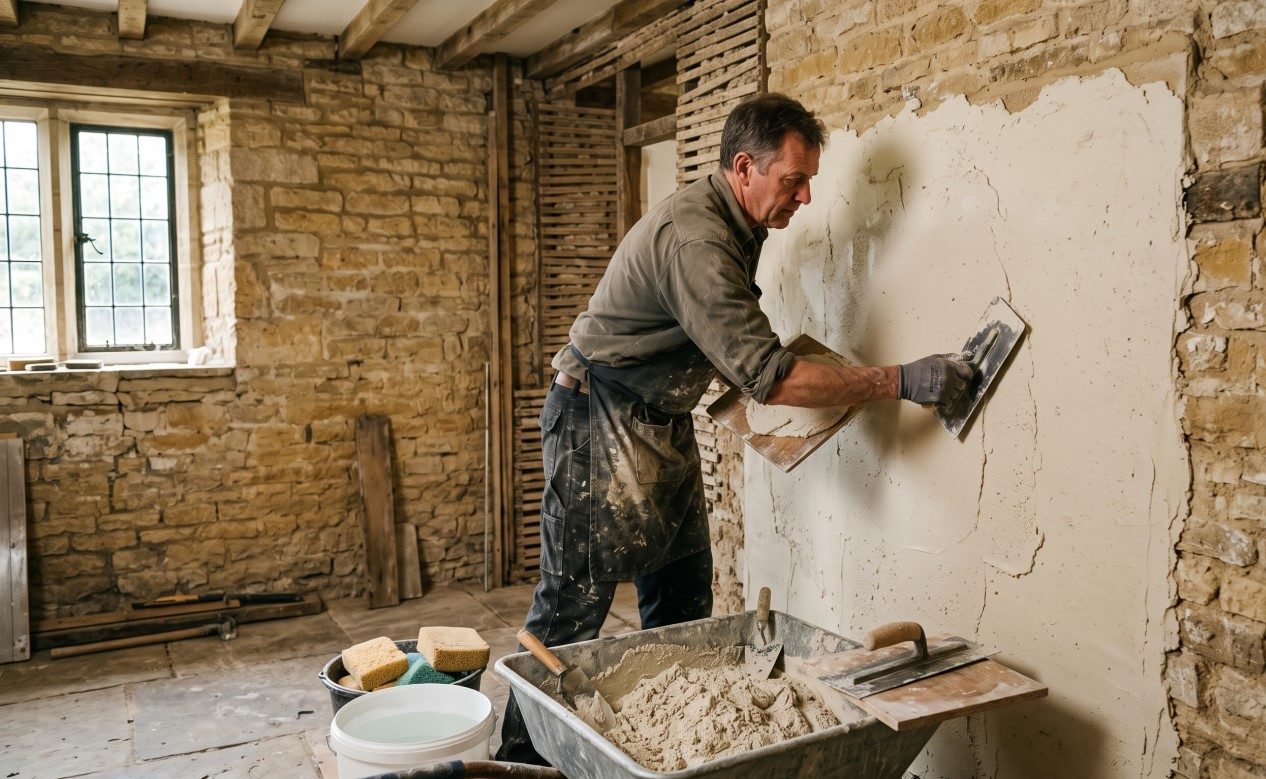
The cost of traditional lime plastering in the Cotswolds typically ranges from £50 to £100 per square metre for standard applications. For complex historic property restorations involving timber lath repairs, pure lime putty, or extensive substrate preparation, pricing generally falls between £95 and £140+ per square metre.
Total project costs are heavily influenced by the condition of the background walls, the choice between hydraulic lime and pure lime putty, and local building regulations. Working with a specialist heritage contractor ensures accurate budgeting and compliance for period homes.
Traditional buildings require specialist care to maintain their structural integrity and character. Using incorrect materials can trap moisture, leading to severe damp problems and structural degradation.
Heritage Plastering focuses on preserving historic architecture using time-tested materials and techniques. Choosing the right specifications prevents costly remediation work in the future.
Lime Plastering Cost Per Square Metre in the Cotswolds
Estimating the financial investment for a restoration project requires an understanding of how heritage materials are priced. Standard modern plastering often uses gypsum, which sets quickly but lacks flexibility and breathability. Lime work is a multi-stage craft that demands significantly more time, patience, and skilled labour.
A basic two-coat lime skim over sound existing lime backgrounds or plasterboard typically costs between £50 and £75 per square metre. This application is ideal for refreshing surfaces that do not require extensive structural rebuilds or deep stabilization.
For authentic historic walls, a traditional three-coat lime putty application on solid brick, stone, or lath ceilings generally costs between £95 and £140 per square metre. The higher price reflects the intensive labor required to build up the base, float, and finish coats.
When dealing with damp-prone walls, cellars, or external exposures, using natural hydraulic lime specifications typically costs from £95 to £160 per square metre. In contrast, modern gypsum alternatives cost far less upfront but lack the vital breathability needed for old structures.
Understanding the Material and Labour Variations
The total figure on a quotation is rarely just about the surface area. The underlying background structure dictates how much preparation work must occur before the first scratch coat is applied. Removing modern cement renders or gypsum patches adds considerable labor to the timeline.
The specific choice of material also shifts the pricing structure significantly. Selecting natural hydraulic lime or pure lime putty involves different curing periods and application methodologies.
Natural Hydraulic Lime vs Lime Putty Specifying
Choosing the correct binder type alters both the material costs and the project duration. Property owners often evaluate options like NHL 3.5 vs NHL 2 lime plaster to determine the exact structural match for their stone walls.
Pure lime putty cures slowly through carbonation, requiring careful moisture control and multiple installation visits. Natural hydraulic lime finishes set chemically, which can reduce labor costs by speeding up the project timeline.
Substrate Conditions and Invisible Labor
The state of the original timber laths or stone masonry can instantly change an initial estimate. If a ceiling has sagged, structural stabilization is necessary before applying any new coats.
[Substrate Survey] ➔ [Removal of Modern Cement/Gypsum] ➔ [Timber Lath Patching] ➔ [Three-Coat Lime Application]Discovering hidden damp or structural movement during the initial strip-out phase will always require extra time. Budgeting a contingency fund of fifteen to twenty percent is highly recommended for period home renovations.
Primary Cost Factors for Cotswold Heritage Properties
Location and local architecture present specific challenges that influence pricing structures across Gloucestershire. Listed status, conservation area rules, and regional building styles require specialized handling.
Regional Architecture and Material Accessibility
Cotswold stone properties possess unique structural profiles that demand highly flexible and breathable internal finishes. Working on these historic structures requires specialized knowledge of regional limestone and rubble-fill construction techniques.
Locating authentic regional aggregates that match the historic mortar matrix can sometimes add to material expenses. Contractors must source specific sands to ensure the finished texture matches the building’s historical footprint.
Listed Status and Heritage Regulations
Altering a Grade II listed building without explicit consent can lead to severe legal and financial penalties. Achieving regulatory compliance requires documented methodologies and precise material tracking.
Understanding the complex guidelines surrounding listed property plaster repair is essential for avoiding project delays. Heritage officers frequently insist on pure lime putty formulas to maintain historical accuracy, which increases overall labor commitments.
Technical Differences in Application and Curing Timelines
The extended timeline of traditional plaster applications remains a major driving factor behind the total cost per square metre. Unlike modern multi-finish plasters that set hard within a matter of hours, traditional mortars cure through a chemical process that requires constant ambient monitoring.
Each layer must be allowed to shrink, crack slightly, and carbonize before the subsequent finish can be applied. Hurrying this natural cycle invariably introduces structural vulnerabilities that can result in premature debonding or surface failures.
The Role of Animal Hair in Structural Reinforcement
Historically accurate backing coats frequently incorporate coarse animal fiber, such as ox or horse hair, into the wet mix. This traditional aggregate functions exactly like modern rebar within structural concrete, distributing tension across the surface area.
Integrating hair evenly into a fat lime putty demands rigorous mechanical mixing and manual blending. This inclusion increases aggregate costs but remains an absolute requirement when matching historic lath and plaster ceiling specifications.
Environmental Manipulation During the Curing Phase
Controlling humidity and airflow inside an unheated period property requires specialized equipment and constant oversight. Plasterers must use wet hessian sheeting to shelter fresh surfaces from rapid dehydration caused by seasonal drafts or intense sunlight.
If the moisture leaves the wet mix too quickly, the plaster will fail to carbonize fully and become brittle. Managing this environment over several weeks adds overhead margins that are rarely seen in modern drywall skimming.
Long-Term Financial Benefits of Breathable Finishes
While the initial cost per square metre can surprise some homeowners, the long-term return on investment is substantial. Modern non-breathable materials frequently trap moisture within porous stone walls, leading to systemic structural failures.
Using synthetic barriers or impermeable coatings creates a cycle of repetitive repairs every few years. Traditional materials handle moisture naturally, providing a durable solution that protects the building for decades.
Industry Insight: The Society for the Protection of Ancient Buildings notes that trapping moisture in solid walls with modern cement can cause permanent masonry decay within just a few winters.
Investing in breathable internal finishes helps regulate interior humidity levels naturally, creating a healthier living environment. This approach prevents timber rot, peeling paint, and damp patches, preserving the resale value of classic properties.
Unveiling Hidden Expenses in Historic Wall Restoration
When dealing with heritage homes, a professional itemized quotation must account for preparatory steps that happen before plaster installation. Neglecting background remediation will only compromise the structural adhesion of the fresh mortar.
Stripping away multiple layers of ancient oil-based paints, toxic wallpapers, or decaying previous coatings requires highly delicate manual labor. Power tools can permanently scar fragile historic masonry underneath, demanding slower hand-tool methods instead.
Scaffolding and Access in Heritage Interiors
High vaulted ceilings, open timber framing, and historic barn conversions create unique access issues that directly expand labor costs. Erecting specialized interior tower scaffolding or protecting fragile flagstone flooring requires dedicated setup periods.
Contractors must factor in the insurance liability and specialized padding needed when operating heavy equipment around delicate historical features. These asset protection measures naturally shift the overall price per square metre upward.
Architectural Timber Remediation and Lath Replacement
When historical ceiling systems have failed due to roof leaks or historic woodworm infestations, simple plaster patching becomes impossible. Entire sections of traditional split oak or chestnut laths must be carefully uninstalled and replaced.
Securing handmade split laths using traditional stainless steel or copper fixings prevents future rust expansion. This specific technical requirement safeguards the structural hanging weight but carries a higher premium than standard sawn timber.
Navigating Local Planning Constraints and Legal Demands
Properties situated within designated conservation zones across Gloucestershire face rigorous scrutiny regarding material changes. Using standard commercial plaster mixes in these areas can result in forced removal orders from enforcement officers.
Submitting comprehensive building records, photographic surveys, and physical mortar samples represents a necessary phase of any major renovation project. This bureaucratic management demands significant technical literacy from your chosen contractor.
Sourcing Documented Material Declarations
Heritage officers frequently demand formal validation that all materials utilized mirror the regional building style exactly. Sourcing certified local lime products and verified regional sands provides this essential audit trail.
Compiling these technical dossiers ensures your property remains fully protected against regulatory disputes during future real estate transactions. Maintaining clean legal compliance preserves the market value of historic estates.
Why Certified Specialists Outperform Standard Trade Contractors
Attempting to employ general building firms for delicate lime restoration often causes permanent structural complications. Standard tradespeople lack training in the behavior of porous building fabrics and traditional hydration profiles.
Enlisting a dedicated preservation expert reduces the likelihood of catastrophic material failures that require complete stripping and replacement. Paying for professional craftsmanship the first time around represents the ultimate cost-saving measure.
Frequently Asked Questions About Plastering Costs
Why does lime plastering cost more than modern gypsum?
Traditional lime work requires an exceptional level of craft skill, specialized material sourcing, and multiple application layers. Each coat needs significant time to cure properly before the next can be applied, which lengthens the project duration and increases total labor hours.
Can you put a lime finish directly over modern gypsum or cement?
Applying breathable coatings over non-breathable synthetic surfaces is generally ineffective. To understand the risks and mechanical failures involved, property owners should review how cement render creates damp walls before attempting to mix these incompatible systems.
How long does it take for a traditional three-coat system to dry completely?
Curing times depend heavily on local ambient temperature, relative humidity, and structural ventilation. A standard guideline is allowing roughly one month of drying time per 25 millimetres of total plaster thickness before applying breathable paints.
Are there grants available for historic building repairs in Gloucestershire?
Financial assistance is occasionally available for specific architectural restoration projects through historic preservation funds. Property owners should explore local options regarding grants for listed building repairs to see if their conservation work qualifies for economic support.
Choosing the Right Approach for Your Restoration Project
Accurate budgeting for traditional plaster restoration requires assessing surface square footage alongside the building’s history and structural needs. Attempting to reduce costs by using cheap, modern synthetic materials often results in expensive damp issues later. Choosing specialist heritage materials ensures the building remains breathable, structurally sound, and beautiful for generations.
Reviewing a comprehensive lime plaster guide helps clarify material specifications and application methods before requesting formal estimates. Working with experienced, vetted professionals protects your property investment and ensures compliance with building regulations. Contact the team today to arrange a detailed site survey and secure a comprehensive, itemized quote for your project.