



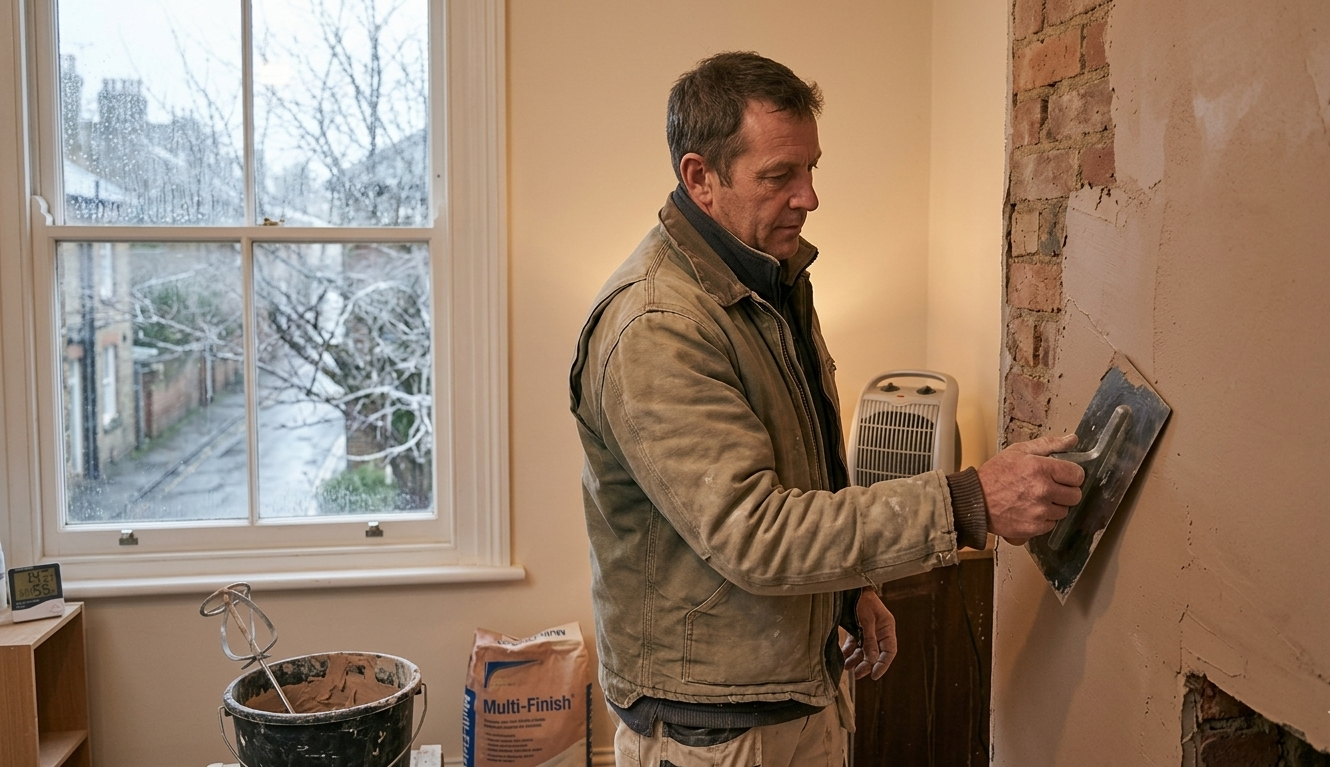
Plastering in winter UK can be tricky. Many homeowners ask, can you plaster in winter UK without cracking or damp problems. However, with careful preparation and the right techniques, it is possible to achieve smooth and lasting results.
In fact, experienced professionals such as Heritage Plastering handle cold-weather projects efficiently. As a result, walls remain strong, durable, and moisture-free even during colder months.
Understanding Plastering in Winter UK
Cold weather naturally slows plaster drying and can also affect adhesion. For instance, frost or high humidity may cause plaster to become uneven or sticky. Therefore, by following winter-specific methods, you can maintain high-quality results.
Additionally, older homes often require extra care. This is because lime plaster for historic homes in Cheltenham absorbs moisture differently than modern plaster systems. As a result, understanding this difference helps prevent issues such as cracking, bubbling, or peeling.
Why Temperature Matters for Plastering in Winter UK
Temperature plays a critical role when plastering during winter. If walls or plaster mixes are too cold, drying slows significantly and adhesion becomes weaker. Consequently, maintaining mild and steady temperatures allows plaster to set properly.
For example, during interior work, pre-heating rooms can significantly improve results. Similarly, eco-friendly homes in Cheltenham often require temperature-controlled plastering methods in order to protect sustainable building materials.
Can You Plaster in Winter Without Problems?
Yes, you can plaster in winter when the correct conditions are maintained. Generally, temperatures consistently above 5°C allow plaster to adhere and dry correctly.
To improve success rates, you should:
-
Ensure indoor spaces are gently heated
-
Use plaster products suitable for cold-weather application
-
Make sure walls are dry and frost-free before starting
By following these steps, winter plastering can produce professional and durable finishes.
Following are the 5 Tips for a Perfect Finish.
Prepare the Environment
First and foremost, preparation is essential. Always check both room and wall temperatures before starting plastering work. In addition, seal drafts, insulate windows, and cover cold surfaces to stabilize the environment.
For exterior work, scaffolding covers can help prevent frost damage. At the same time, modern plastering techniques allow controlled application even in winter conditions.
Use Materials Suited for Cold Weather
Not all plaster types perform equally well in winter conditions. While some plasters dry very slowly, others are specifically designed for faster and more stable setting.
Therefore, it is best to:
-
Choose cold-weather plaster products
-
Avoid moisture-sensitive plaster mixes
-
Consider approved additives designed for winter use
Furthermore, historic properties often benefit from lime plaster in sustainable construction. Interestingly, this material can perform well during winter plastering when applied correctly.
Apply Correct Winter Plastering Techniques
Winter plastering techniques for UK homes
Successful winter plastering depends heavily on proper layering and temperature control. In other words, technique matters just as much as materials.
For the best results:
-
Apply slightly warmed base coats
-
Use multiple thin layers instead of thick coats
-
Avoid sudden temperature changes during curing
By following these practices, plaster will set more evenly and remain durable.
Handle Interior and Exterior Plastering Differently
Exterior plastering requires additional protection from frost, rain, and strong winds. Therefore, careful timing and preparation are essential.
For safer winter exterior work:
-
Only plaster when temperatures remain stable above 5°C
-
Shield walls from wind chill using temporary covers
-
Allow plaster to dry gradually to prevent cracking
These precautions help maintain strong adhesion and smooth finishes.
Control Drying to Avoid Cracks
Winter plaster drying tips UK usually focus on three key factors: airflow, temperature, and humidity control.
To manage drying effectively:
-
Use gentle heating rather than direct hot air
-
Maintain balanced ventilation in the room
-
Use dehumidifiers if humidity levels become too high
As a result, proper drying ensures interior plastering in winter avoids cracks, shrinkage, and soft spots, even on historic walls.
Common Winter Plastering Issues and Solutions
Despite careful preparation, winter plastering may still present challenges. However, most problems can be solved with simple adjustments.
-
Slow drying: Maintain gentle heat and steady ventilation.
-
Peeling plaster: Warm walls slightly before applying plaster.
-
Cracking: Avoid sudden temperature changes during curing.
By addressing these issues early, you can still achieve smooth and professional results.
When to Wait Before Plastering?
Sometimes the best option is to delay plastering work. In particular, you should postpone if:
-
Temperatures drop below freezing
-
Walls are damp due to snow or rain
-
High indoor humidity is expected
Waiting for better conditions can prevent costly repairs and protect plaster quality.
Safety Tips for Winter Plastering
Finally, safety should always remain a priority when working in winter conditions.
-
Wear warm, slip-resistant clothing
-
Keep scaffolding and walkways clear of ice
-
Position heaters safely and avoid fire risks
By following these precautions, both workers and plaster surfaces remain protected throughout the project.
FAQs
Q: Can plaster dry in winter UK?
Yes. With gentle heating and proper ventilation, plaster can dry in winter, although the process is typically slower than during summer.
Q: What is the minimum temperature for plastering?
Ideally, temperatures should remain above 5°C during both application and curing.
Q: Can heaters speed up plaster drying?
Yes, heaters can help. However, avoid directing hot air directly onto fresh plaster because it may cause cracking.
Q: Should exterior plastering be done in winter?
Yes, it can be done, provided proper protection against frost, rain, and wind is in place.
Q: What happens if plaster freezes?
If plaster freezes, it loses strength and may fail to adhere properly to the surface.